Zero Emissions in Freight: Rail & Locomotive
The rail industry remains one of the most significant sources of environmental injustice impacting frontline and fenceline communities and workers. More than 13 million people in the United States live and work near railyards, rail lines, and ports, where some of the dirtiest switcher and line-haul locomotives belch diesel pollution into neighborhoods every day, often just feet from homes, schools, community centers, and workplaces.
Rail pollution is a national issue with local impacts that seriously harm public health, air quality, and the climate. In order to address the impacts from locomotives and rail yards, Moving Forward Network (MFN) demands comprehensive regulations that center the needs of frontline and fenceline workers and communities.

Is the Rail Merger Coming to Your Neighborhood?
Union Pacific wants to buy Norfolk Southern and create the country’s first coast-to-coast railroad. The railroads’ own maps show tracks and trains. They don’t show the schools, parks and neighborhoods next to those tracks, or the communities already breathing diesel pollution. Moving Forward Network made this map so you can see how the merger could affect the places where you live, work and play.
How to use the map
- Search your area.Type a zip code, city or address into the search bar.
- Click a rail line.A pop-up shows how train traffic and hazardous materials shipments would change on that stretch of track. If you see “1 of 8” at the top, use the arrows to see everything at that spot.
- Read the colors.
Over air quality or noise thresholds More hazardous materials Passenger routes
- Turn layers on and off.Use the layers list to show public schools, parks and other places near the tracks.
- Learn more.Open the info panel for data sources and definitions.
Get the fact sheet
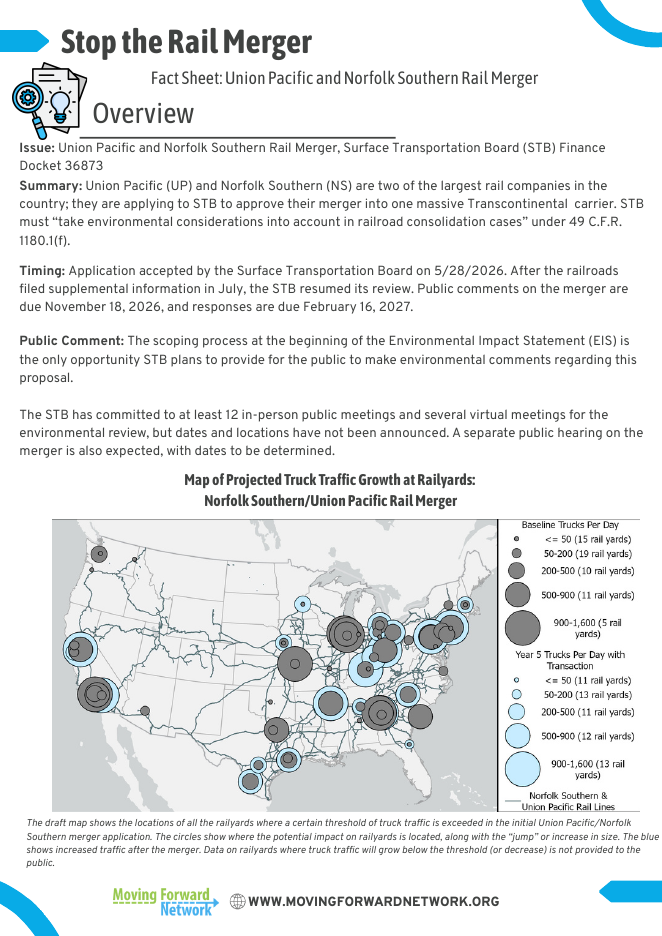
A two-page overview of the Union Pacific and Norfolk Southern merger and why environmental justice advocates oppose it. Share it with your community, your coalition or your local officials.
- Key dates for the Surface Transportation Board review
- Projected truck traffic growth at rail yards across the country
- What the railroads promise, and what past mergers delivered
- Why the merger won’t move U.S. rail toward electrification